There’s a conversation that happens far too often — someone mistakes basic human decency for romantic interest, and suddenly the person who was just being nice is cast as the villain. If you’ve ever been accused of “leading someone on” simply because you smiled, held a door, or asked how someone’s day was going, you already know how frustrating this can feel.
So let’s clear this up once and for all: being friendly and leading someone on are not the same thing, and it’s time we talked about why that distinction matters.
What Does It Actually Mean to Be Friendly?
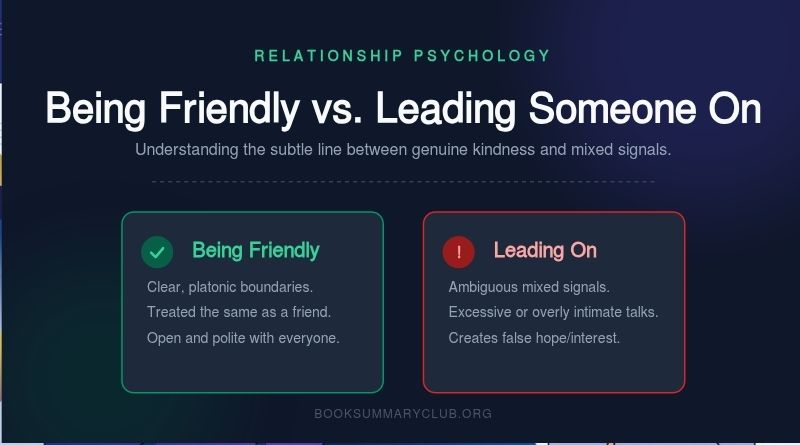
Friendliness is one of the most basic forms of human connection. It costs nothing and asks for nothing in return. Here’s what being genuinely friendly looks like in everyday life:
- Smiling at people you pass in the hallway
- Greeting coworkers or neighbors by name
- Asking someone how their weekend went
- Helping a colleague carry something heavy
- Holding the door open for a stranger
- Offering a kind word when someone seems to be having a rough day
- Saying “no, thank you” clearly and directly when asked on a date
Notice that last one. A friendly person who isn’t interested doesn’t keep you guessing — they give you a clear, respectful answer. That’s actually one of the clearest signs that someone is just being nice, not playing games.
What Does Leading Someone On Actually Look Like?
Leading someone on is a specific pattern of behavior — one that involves deliberately keeping another person emotionally invested while having no real intention of pursuing anything. It’s not about friendliness. It’s about ambiguity used as a tool.
Here are some genuine signs that someone is leading you on:
- Flirting without follow-through — sending romantic signals but pulling back whenever things get real
- Vague answers to direct questions — responding to “Would you like to go out sometime?” with “Maybe” or “We’ll see” instead of a clear yes or no
- Treating you like a placeholder — enjoying your attention and company while actively keeping you at arm’s length
- Inconsistent behavior — warm and affectionate one day, cold and distant the next
- Avoiding commitment while encouraging closeness — getting emotionally intimate without any intention of defining the relationship
The throughline in all of these? Deliberate ambiguity. The person knows what they’re doing and chooses not to be clear because it serves them in some way.
The Real Difference: It Comes Down to Intention and Action
Here’s the simplest way to understand the distinction: friendly people are consistent and clear; people who lead others on are inconsistent and vague.
A person who is simply being friendly treats everyone around them with the same warmth. They’re kind to their coworkers, their neighbors, and yes, even people who have expressed interest in them. When asked out, they say no — politely, but clearly. There’s no confusion in their actions over time.
A person who leads someone on behaves differently depending on what they want in a given moment. They may lavish attention on someone when they’re lonely or bored, then withdraw when that need is met. The behavior is self-serving, even if not always consciously so.
Action is the real test. Not a single moment or interaction, but the full pattern of someone’s behavior over time.
Why Do People Confuse the Two?
A big part of why this confusion happens is that some people have been taught — directly or indirectly — that attention equals interest. If someone is warm, helpful, and engaged in conversation, it can feel romantic, especially if you’re hoping it is.
But warmth and romantic interest are not the same thing. Some people are simply kind by nature. They ask how you’re doing because they genuinely care. They remember your name, laugh at your jokes, and check in on you — because that’s who they are with everyone, not because they’re secretly interested in you.
Misreading that kind of person and then blaming them for your misinterpretation isn’t fair. Nobody should have to become cold or rude just to make it clear they’re not interested.
A Practical Example
Imagine a woman at work who is warm and sociable with everyone on her team. She remembers birthdays, brings in snacks occasionally, and genuinely asks about your life. She’s never made plans outside of work with you, never texted you first, never suggested anything beyond a collegial friendship.
Is she leading you on?
No. She’s doing her job as a kind human being. The signals she’s sending aren’t romantic — they’re professional and friendly. If she’s turned down invitations politely but clearly, the message is already there. Reading her friendliness as something more isn’t her fault; it’s a misinterpretation.
Now compare that to someone who routinely texts late at night, drops hints about dates they’d like to go on, accepts invitations but cancels last minute, and leaves every conversation ending with “we should really do this properly sometime” — but never follows through. That’s a different pattern entirely.
What to Do If You’re Genuinely Confused
If you’re unsure whether someone is being friendly or romantically interested, there’s a simple solution: ask directly, and respect whatever answer you get.
A straightforward “I really enjoy spending time with you — would you want to grab dinner sometime?” puts the question on the table without any pressure. If the answer is a clear yes, great. If it’s anything other than an enthusiastic yes — including a vague “maybe” — treat that as a no and move forward accordingly.
What you shouldn’t do is interpret friendliness as hidden interest, keep pushing hoping for a different answer, or make the other person feel responsible for your expectations.
The Bottom Line
Being friendly is an act of generosity. Leading someone on is an act of selfishness. They are not the same, and the difference lies not in a single smile or kind word, but in the pattern of behavior over time — and above all, in honesty.
If someone is being kind to you, accept it for what it is. If you’re someone who tends to keep people on the hook without real intention, it’s worth asking yourself why — and whether that behavior is fair to the people in your life.
And if you’re a naturally warm, friendly person who’s been told you’re “leading people on” just by being yourself? You don’t need to change who you are. Kindness is not a crime.